
Power Hub Glossary
Offshore wind is a complex industry, with many of its own terms and acronyms. Each section below covers the terms used on different pages throughout the site, including the Interactive Map, Project Pages, State Pages, and Lease Area Pages.
Click on a site area below to skip to a section, or scroll down to view the entire glossary.
Interactive Map
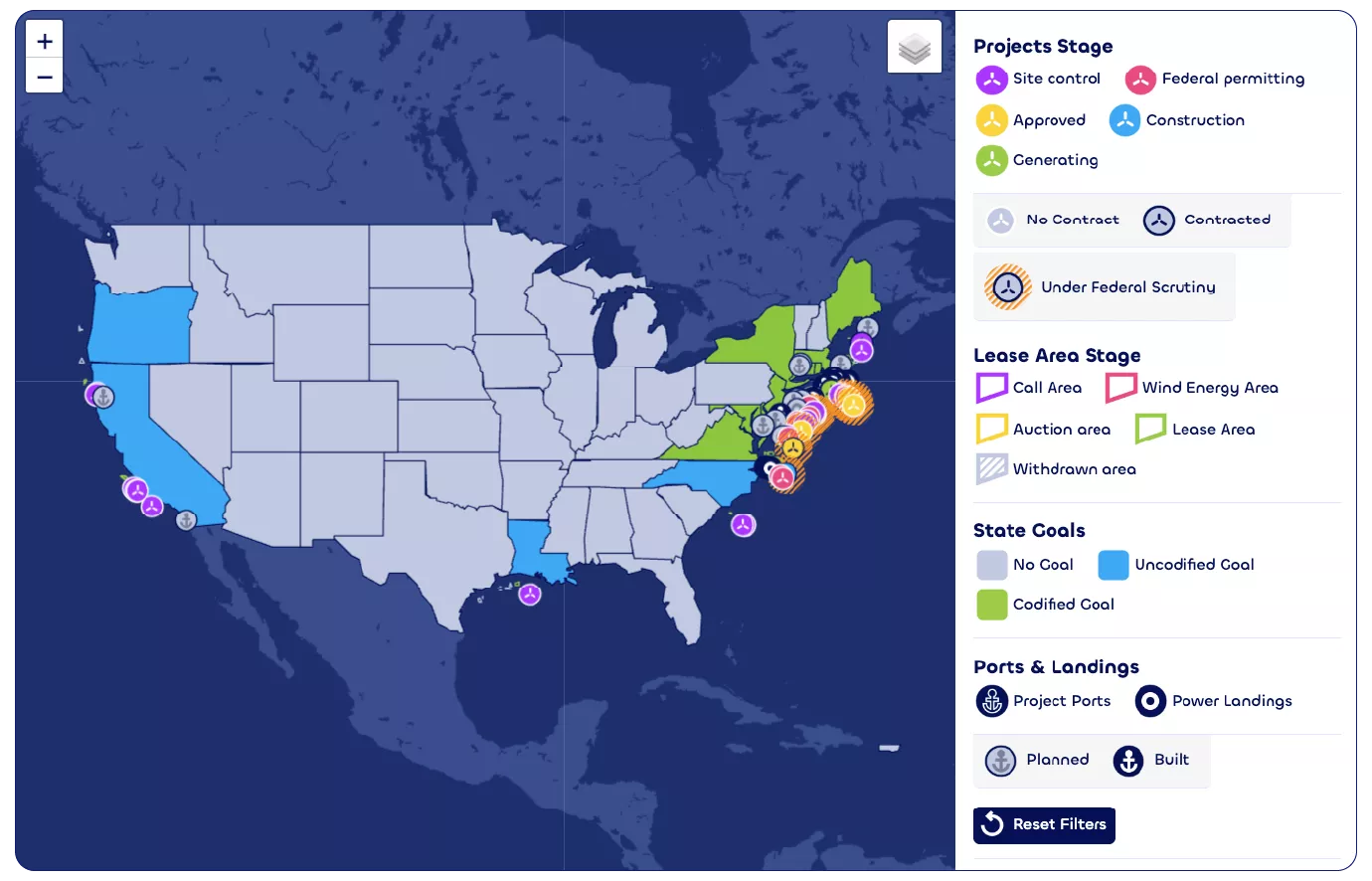
Offshore wind projects go through several planning, permitting, and development stages before they begin generating power. Our graph and map let users view and filter projects based on these characteristics.
Scroll down to learn more about terms used on the Interactive Map.

Site control
Site Control means that a project's developer owns the rights to develop a project in a given lease area. Offshore wind developers typically lease areas of the ocean from the federal government. Projects in the Site Control category have not submitted official applications for a Construction and Operations Permit, but they may be engaged in planning activities, such as meteorological studies. Learn more about the leasing process here.

Federal Permitting
Federal Permitting means that a project's developer has submitted a Construction and Operations Plan (COP) to the Bureau of Ocean Energy Management (BOEM) approval. Projects need several permits from the federal government to begin construction, but the Construction and Operations permit is the biggest, most complex, and most important permit. The federal permitting process takes several years to complete and involves many federal agencies and offices. Learn more about the permitting process here.

Approved
Approved means that a project's Construction and Operations Plan (COP) has been approved by BOEM. This approval is called a Record of Decision (ROD). In some instances, BOEM may approve a project's COP but require certain modifications to minimize effects on marine life, fishing and maritime activity, or national defense. A project may begin offshore construction activities once it has received permit. Learn more here.

Construction
Construction means that a developer has begun installing the offshore components of the project, such as turbine foundations, turbine towers, blades, offshore substation equipment, and cables. It typically takes 2-3 years to build an offshore wind project once offshore construction begins. Projects typically begin generating some electricity and send it to the grid before they have been completed.

Generating
Generating means that the project is complete and generating electricity for use on the power grid. Offshore wind projects are expected to generate power for 20-30 years before they are decommissioned.
Contracted
Contracted means that a project has signed a contract to sell its electric power to an off-taker—or buyer—usually a utility or state. The buyer pays a fixed or variable fee to the project for every mega-watt-hour (MWh) of electricity it generates. Contracts, called Power Purchase Agreements (PPAs) or Offshore Renewable Energy Certificate Agreements (ORECs) ensure that projects receive a steady income and are an important tool for financing the project.
Project Pages
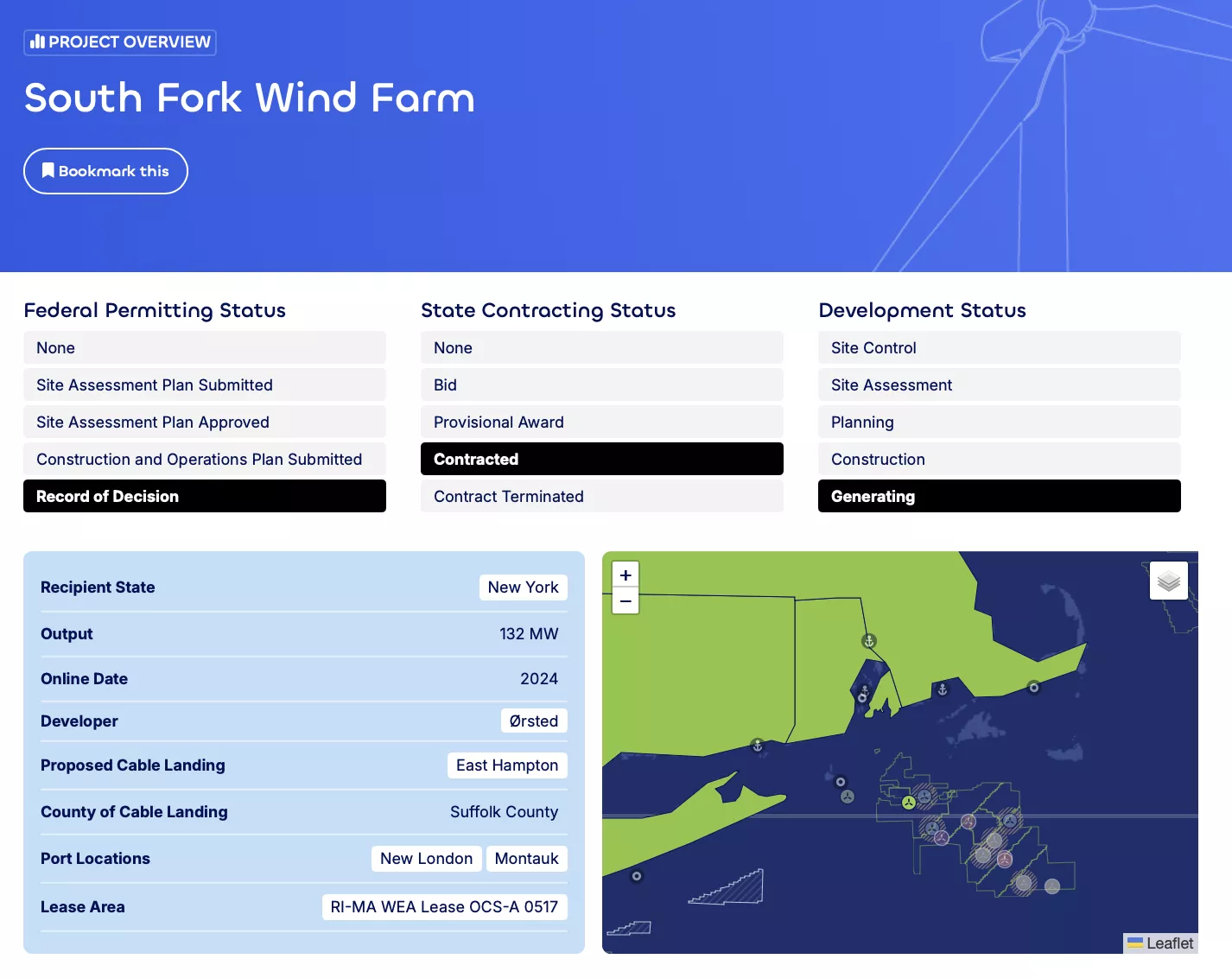
Project pages provide more detail about individual offshore wind projects, including their progress through federal permitting, state contracting, and development processes.
Scroll down to learn about the terms used on project pages.
Federal Permitting
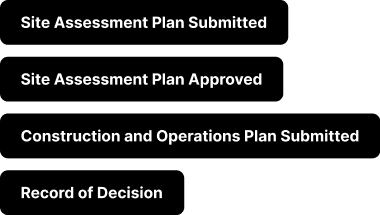
Federal permitting is a complex, multi-year process involving several federal agencies, including BOEM, NOAA, the Department of Defense, the U.S. Army Corps of Engineers, and more. Projects typically begin the process by getting permission from BOEM to conduct a Site Assessment, where they map the seafloor around the project and install a meteorological buoy to measure wind speeds and other ocean conditions where they intend to build the project. After several years of data collection, projects submit a Construction and Operations Plan (COP), which tells BOEM how the developer intends to build the project. BOEM takes multiple years to review the COP. If Approved, the project may begin construction.
State Contracting Status
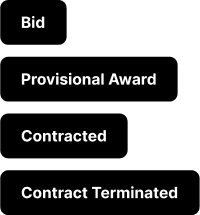
Offshore wind projects are financed using power contracts negotiated between the project developer and the project's recipient state, typically called Power Purchase Agreements (PPAs) or Offshore Renewable Energy Certificates (ORECs). These contracts set a fixed or variable price for the electricity that the project produces, ensuring that the project has a steady stream of revenue to pay for its construction. States negotiate power contracts by issuing a Request for Proposals (RFP). Bid means that a project has responded to the RFP. Provisional Awards are granted to projects that the state intends to sign a contract with, and they become Contracted once the contract is signed. A state or project developer may Terminate a contract if the terms no longer make financial sense.
Development Status
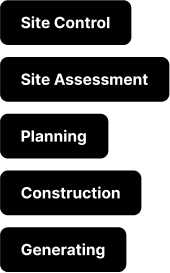
Projects begin when a developer secures Site Control by leasing an area of the Outer Continental Shelf (OCS) from the federal government. Developers then conduct a Site Assessment to study the seafloor and meteorological, biological, and oceanographic conditions of the lease area. Once complete, the developer can Plan the project and develop a design. After federal approval, the developer will Construct the project over a period of 2-4 years. Once complete, the project will begin Generating electric power and sending it to the grid.
Lease Area Pages
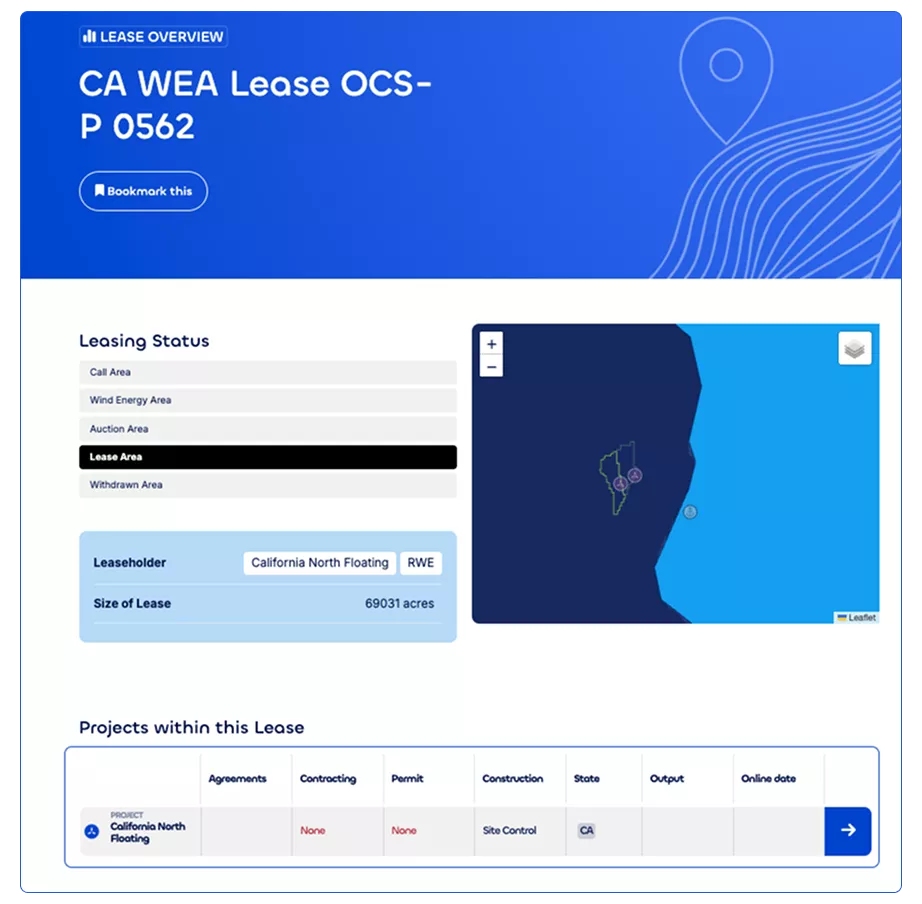
The federal government's Bureau of Ocean Energy Management (BOEM) identifies and leases areas of the ocean for offshore wind developers to build projects. Lease Area Pages provide details about the identification process and lessees of particular lease areas.
Note that since President Trump was inaugurated in January 2025, the federal leasing activities for offshore wind have been paused.
Scroll down to learn about the terms used on Lease Area Pages.

Call Areas
Call Areas are large areas of the ocean that BOEM identifies for potential offshore wind power development. To determine if a region is suitable for offshore wind development, BOEM puts out a Call for Information and Nominations for a large area, or Call Area. BOEM then uses input from state and federal government agencies, industry, academia, and the public to determine which portions of the Call Area are best suited for further study. These portions may become Wind Energy Areas (see next).

Wind Energy Areas
Wind Energy Areas (WEAs) are areas of the ocean designated by BOEM for future offshore wind power development. Factors that BOEM considers in the creation of a WEA include fishing activity, current or future maritime traffic, U.S. Department of Defense-designated uses, and recommendations by offshore wind developers regarding wind resources. The WEA is then subject to a National Environmental Policy Act (NEPA) review, where BOEM determines the environmental impact of leasing the area to an offshore wind developer.

Auction Area
Auction Areas are areas of the ocean that BOEM intends to lease to an offshore wind project developer. If BOEM determines that multiple developers are interested in building offshore wind projects in a WEA, they hold an auction to determine which developer will get the right to lease the area. BOEM typically carves the WEA into several Auction Areas. Auctions are run by BOEM and won by the developer who submits the highest bid for the designated area.

Lease Area
Lease Areas are specific areas of the ocean where developers have purchased the right to develop offshore wind projects. Once an Auction Area has been won by a developer, it becomes a Lease Area. A lease gives the developer the right to develop an offshore wind project in the designated area for 25 years, subject to approval by BOEM and other federal agencies. Lease areas can be transferred to another developer, also subject to approval by BOEM.

Withdrawn Area
In July 2025, the federal government withdrew all current Auction Areas, WEAs, and Call Areas from consideration for future development. These areas have been marked as Withdrawn Areas.
State Pages
State governments are one of the primary drivers of offshore wind development in the US. They set goals for offshore wind power development, negotiate power contracts with offshore wind developers, attract large offshore wind component manufacturers and suppliers, and train their workforce for jobs in offshore wind development.
Scroll down to learn about the terms used on State Pages.
Target Progress Status
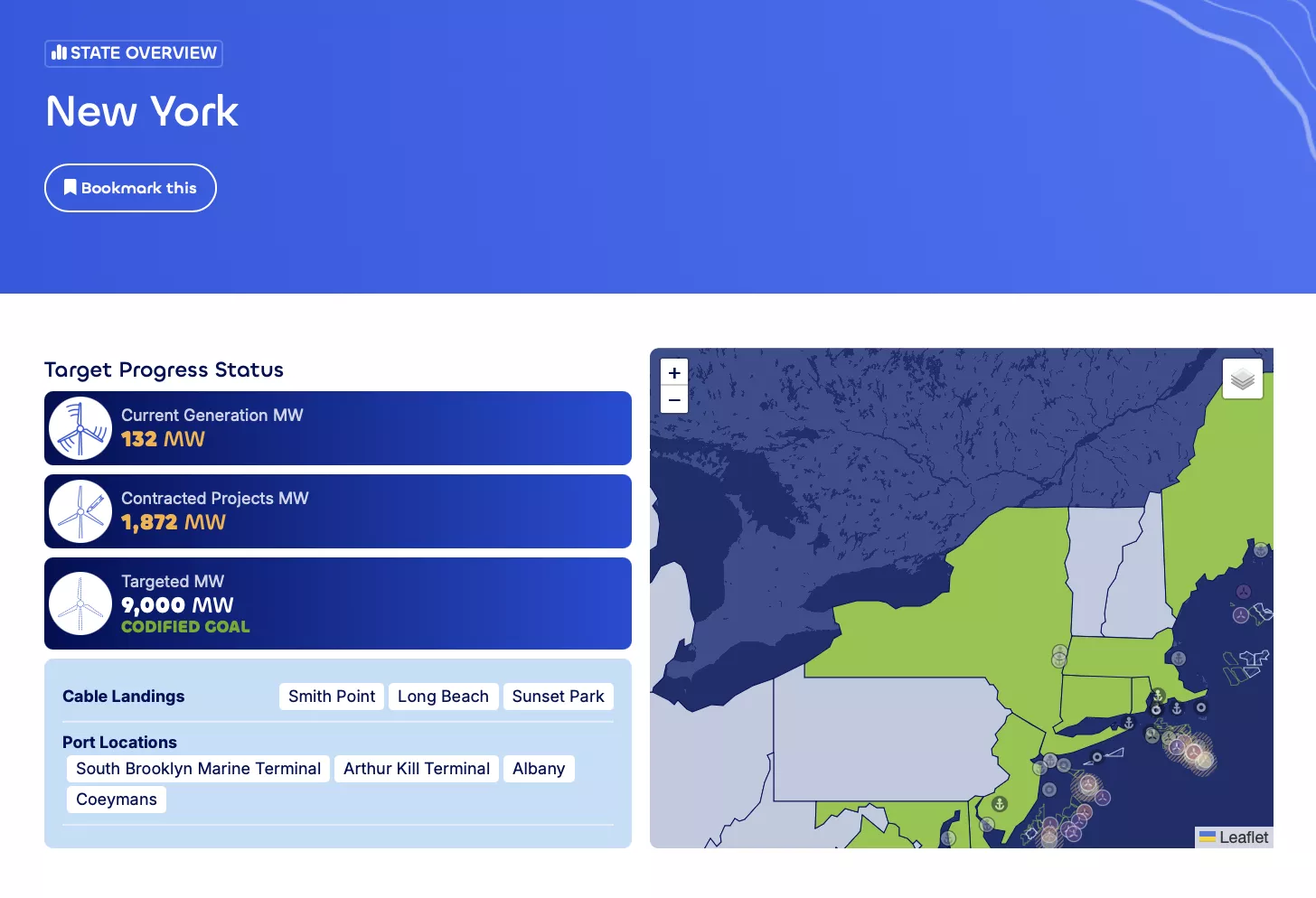
States announce their intention to build offshore wind power by establishing an offshore wind Target or Goal, either through law or through executive action by their governor. An offshore wind target communicates to developers that the state wants to get a certain amount of its power from offshore wind. States meet their targets by negotiating power contracts with offshore wind developers, where the state or its utilities agree to buy power from an offshore wind farm and at an agreed-upon set or variable price. This Contract helps the project developer finance the construction of their offshore wind farm. Once a wind farm is operational, it will begin Generating power and sending it to the state's electric grid. On State Pages, users can see how close states are to achieving their offshore wind targets.

State Laws
Each State Page on the Power Hub includes the laws and executive orders that set the state's offshore wind target and allow it to negotiate contracts with offshore wind developers. These laws set certain rules and conditions for the contracting process. They may also include incentives for offshore wind developers and component suppliers and grants for schools, unions, and other organizations in the state to train workers to work in offshore wind.